September news from the ECR Subcommittee
Dear fellow researchers,
Welcome to the September edition of the SFRR-E ECR newsletter.
This month, we say goodbye to the great Pari Kritsiligkou, launch a new season of ECR webinars, and open the call for abstracts for the 4th SFRR-E ECR PhD Symposium. We also look back at the highlights of our September Emerging Leaders in Redox Biology webinar and revisit our 6 October session, from Cell cycle to cell fate: redox control of cellular decisions. Finally, we invite you to join the first Skills & Career webinar of the season on 20 October, where we will discuss strategies for publishing in academic journals.
 This month's highlights
 Farewell to Pari Kritsiligkou
 New webinar season unveiled
 Emerging Leaders: Cell cycle to cell fate (6 October)
 Skills and Career: "Publishing in academic journals: what to expect and how to increase your chances of success" (20 October)
 Call for abstracts: 4th PhD Symposium
 September webinar highlights: Redox in hypoxia
 Recent publications and call for papers
 Upcoming events and opportunities
Thank you, Pari!
 This month, we say goodbye to Paraskevi Kritsiligkou (Pari) as she embarks on an exciting new chapter in her scientific career. Over the years, Pari has been at the heart of the ECR Subcommittee, serving first as Co-Chair and later as Chair, and helping shape virtually every initiative we have undertaken, including establishing our Mentoring program. Her energy and determination have consistently inspired the entire team. Beyond being an exceptional scientist, Pari has been a mentor, role model, and a driving force within our community. Now leading her own research group at the University of Liverpool, where she investigates redox signalling and intracellular redox heterogeneity, we have no doubt that she will continue to achieve great things. We are incredibly grateful for everything she has contributed to the ECR community and wish her every success and happiness in this exciting new adventure.
A New Season of ECR Webinars Begins
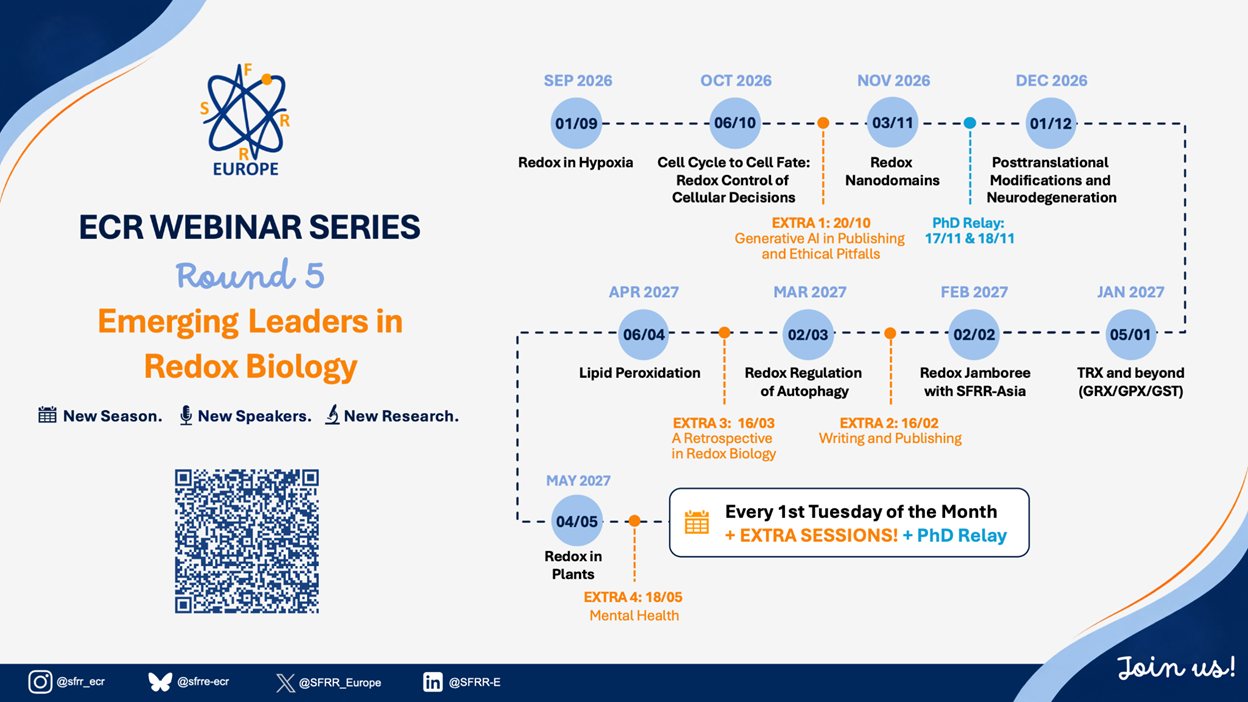
We're excited to launch Round 5 of the SFRR-E ECR webinar series, Emerging Leaders in Redox Biology. Over the coming months, we'll welcome a new group of speakers from across the redox community to share their latest research, ideas, and perspectives.
This season will explore a wide range of topics, including hypoxia, redox nanodomains, autophagy, lipid peroxidation, thiol systems, plant redox biology, and neurodegeneration. Alongside our regular webinars, we'll also host several special sessions, including discussions on scientific publishing, artificial intelligence, mental health in academia, and our popular PhD Relay initiative.
Subscribe to the SFRR-E ECR Webinar Calendar
Never miss a webinar again!
Add our dedicated calendar once (check the link below), and all current and future SFRR-E ECR webinars will automatically appear in your calendar, complete with joining links and event information. Alternatively, you can also scan the QR code in the webinar series’ timeline.
Call for Abstracts: 4th PhD Symposium
Abstract submissions are now open for the 4th edition of our PhD Symposium, "Redox Relay Race: PhD Students on the Move", taking place online on 17-18 November 2026 (15:00 CET). This annual event offers PhD students the opportunity to showcase their research through a 5-minute flash talk followed by 2 minutes of Q&A, receive feedback from peers and senior researchers, and connect with the wider redox community.
Submission deadline: 15 October 2026 (selected speakers will be notified by early November).
Who can apply? Any PhD student working in redox biology (the first author must be an SFRR-E member).
 Prize: Free registration for the SFRR-E Annual Meeting 2027 in Porto for the best presentation.
Abstracts (maximum 300 words) should be submitted through the SFRR-E intranet. Select “Call for PhD Symposium” from the menu on the left.
Abstracts should briefly describe:
- Your research topic and why it matters
- The key scientific question being addressed
- The methods being used
- Your main findings or progress to date
 For full submission guidelines and the abstract template, please visit the SFRR-E intranet.
Emerging Leaders in Redox Biology Webinar | Cell cycle to cell fate: redox control of cellular decisions
The Emerging Leaders in Redox Biology webinar series continued on 6th October with its second session.
This webinar focused on the redox control of cellular decisions, featuring research from Julia Vorhauser (Karolinska Institutet, Sweden) and Silvia Torchio (Institut Curie, France).
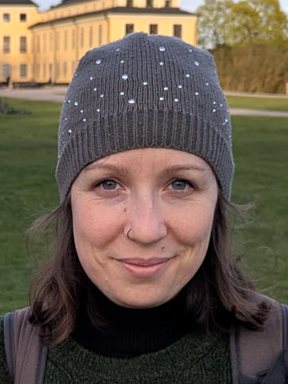 Cysteine oxidation meets the cell cycle: a redox switch in p21
Julia Vorhauser (Karolinska Institutet, Stockholm, Sweden)
Julia Vorhauser is a postdoctoral researcher in the laboratory of Anna Wredenberg at Karolinska Institutet, where she investigates how protein oxidation regulates mitochondrial metabolism and contributes to metabolic disease. Her research builds on extensive experience in redox biology, including the generation of cell cycle-resolved redox proteomes during her PhD, and uses redox proteomics approaches to uncover how redox regulation shapes cellular function and metabolism.
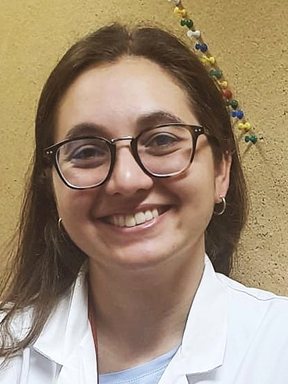 Redox control of intestinal organoids in homeostasis and development
Silvia Torchio (Institut Curie, Paris, France)
Silvia Torchio is a postdoctoral researcher at Institut Curie, where she studies how redox-related mechanisms shape stem cell fate decisions in the small intestine using murine organoid models. Combining expertise in stem cell biology, molecular biology and advanced imaging, her research explores how redox regulation influences intestinal development and tissue homeostasis.
You will find the highlights of this webinar in our next newsletter. Remember that you can also watch recordings of the webinars through the SFRR-E intranet.
Upcoming Skills & Career Webinar | Publishing in academic journals
The Skills & Career webinar series returns on 20th October with the first session of the new season.
Publishing your research can be a challenging process, particularly for early-career researchers navigating manuscript submission, peer review, and editorial decisions. In this webinar, Mark Gannon, Senior Publisher at Elsevier, will provide an insider’s perspective on academic publishing and share practical advice on how researchers can maximise their chances of publication.
 Webinar at a Glance
Date: 20th October 2026
 Time: 15:00 CET
Topic: Publishing in academic journals
Platform: Zoom (Click here to join)
 Publishing in academic journals: what to expect and how to increase your chances of success
Mark Gannon (Elsevier, Oxford, United Kingdom)
Mark joined Elsevier in 2012 and has since been in a variety of editorial and managerial roles. In 2019, Mark joined Elsevier’s journal publishing division as the Publisher for Microbiology. During this time, he successfully expanded the portfolio through various strategic initiatives: supporting the establishment of new journals; launching titles and facilitating the transition of society-owned journals to an Open Access model. Mark became the Senior Publisher for Applied Biochemistry in 2025 and has been working with the SLAS journals ever since. During a short spell away from Elsevier, Mark worked for a registered training provider, delivering training courses to commercial officers in the British Army. Mark holds a degree in Applied Languages from the University of Portsmouth, UK. He is based in Oxford in the United Kingdom.
September Webinar Highlights | Redox in Hypoxia
Our first Emerging Leaders in Redox Biology webinar of the new season explored how redox processes shape cellular responses during development and hypoxia. The session featured outstanding talks from Taylor Covington (Harvard Medical School, USA) and Christopher Switzer (University of Leicester, UK).
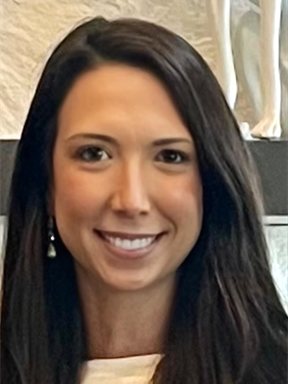 Redox regulation of cardiac development
Taylor Covington, MSc
Harvard Biological and Biomedical Sciences PhD Program, Harvard Medical School, Boston, USA
Breathe in and grow up! The transition from fetal to postnatal life brings a major increase in tissue oxygenation, driving cardiomyocyte maturation from hyperplastic to hypertrophic growth, a shift from glycolytic to oxidative metabolism, and a reduction in proliferative capacity. This raises the question of how oxygen and ROS contribute to this process. In this webinar, Taylor shared with us how, using proteomics, she compared fetal and postnatal hearts and identified specific cysteine oxidations that increased or decreased during maturation. She currently focuses on oxidations identified in MSL2, an E3 ubiquitin ligase and a component of the MSL histone acetyltransferase complex. Using iPSC-derived cardiomyocytes, her research found that loss of MSL2 affected cardiomyocyte maturation, while point mutations caused substantial transcriptomic remodelling. Her observations therefore suggest that redox regulation of MSL2 may contribute to postnatal cardiomyocyte development.
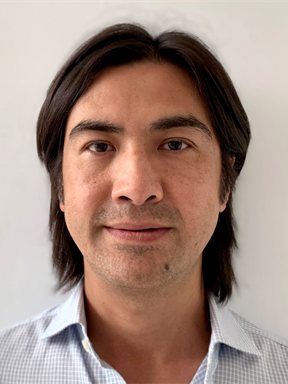 Reactive sulfur species and hypoxia across biology
Christopher Switzer, PhD
Division of Molecular and Cell Biology, School of Biological and Biomedical Sciences, College of Life Sciences, University of Leicester, Leicester, UK
Can sulfur tell a cell it's running out of oxygen? It has long been assumed that hypoxia is associated with increased reactive oxygen species (ROS), but recent work from Christopher and others suggests that ROS do not increase during hypoxia. This raises the question of which oxidants drive the cellular response to low oxygen. In this context, he investigates reactive sulfur species (RSS) as potential oxidants. Using LC-MS, fluorescent probes, and a newly developed assay for elemental sulfur, his lab found that RSS increase during hypoxia, from yeast to mammalian cells. He further showed that persulfides, traditionally considered antioxidants, can act as potent oxidants under physiological conditions. Persulfides react with the same pool of cysteines targeted by peroxides and induce similar stress-response and transcriptional programmes. His ongoing work, using patient-derived organoids and multi-omics approaches, aims to define the sources and biological roles of RSS during hypoxia.
Remember that you can also watch recordings of the webinars through the SFRR-E intranet.
 Follow the ECR Community
Want to learn more about the ECR Subcommittee and our activities?
Follow us on:
- Instagram: @sfrr_ecr
- Bluesky: @sfrre-ecr.bsky.social
- X: @SFRR_Europe
- LinkedIn: SFRR-E
 Questions, suggestions, or ideas?
Get in touch at ecr@sfrr-europe.org. We'd love to hear from you.
– The ECR Subcommittee Team
Upcoming Events
BMFZ Redox Medicine
Düsseldorf, Germany | 5 November 2026
Biochemical Society: Redox – The Good, The Bad and The Unexpected
Cambridge, UK | 16-18 November 2026
Late-breaking poster abstracts deadline: 16 October
12 SFFR Asia Biennial Meeting
Chiang Mai, Thailand | 16-19 December 2026
Abstract deadline: 15 October | Early registration deadline: 30 October
23rd Biennial Meeting of SFRR International 2027
Redox Frontiers 2027: Expanding Horizons with New Concepts and Technologies
Sendai, Japan | 28–31 March 2027
Abstract deadline: 10 October | Early registration deadline: 5 January
Redox-regulated Metabolism & Cell Death
Seoul, Korea | 1–3 April 2027
Abstract deadline: 30 November | Short-talk application deadline: 31 January
SFRR-Europe Annual Meeting
Porto, Portugal | 1–3 September 2027
More info soon
SfRBM 2027 Bi-Annual Conference
Denver, Colorado, USA | 17–20 November 2027
More info soon
Redox Reads
 Research Highlights
Sulfur partitioning from cysteine controls T cell proliferation and effector function
Kelly et al., Cell (2026)
Reveals how cysteine allocation between glutathione synthesis and iron-sulfur cluster biogenesis regulates CD8+ T cell proliferation, effector function, and anti-tumour immunity.
NAD-dependent redox control enables endothelial quiescence and vascular stabilization during angiogenesis
Zhao et al., Cell Metab (2026)
Demonstrates that NAD metabolism is essential for endothelial cells to return to quiescence and stabilize newly formed blood vessels by suppressing mitochondrial H2O2 signalling.
Ageing alters cysteine oxidation-regulated redox signalling in skeletal muscle: Integrative omics and AI-based structural predictions
Ersoy & Jackson, Exp Physiol (2026)
Combines redox proteomics and AI-based structural modelling to reveal how ageing selectively rewires cysteine-dependent signalling networks in skeletal muscle.
Protein thiol alterations drive pathologic liquid-liquid phase separation in the aging brain
Vignane et al., Nat Struct Mol Biol (2026)
Shows that age-related changes in protein thiol modifications promote aberrant biomolecular condensation and aggregation, linking impaired persulfidation to neurodegeneration.
Crosstalk between S-nitrosylation and glycation defines a metabolic vulnerability in liver and renal cancers
Pecorari et al., Nat Commun (2026)
Identifies a metabolic mechanism connecting S-nitrosylation, methylglyoxal accumulation, and NRF2 activation, uncovering a therapeutic vulnerability in liver and kidney cancers.
 Reviews Worth Reading
Selenium metabolism, lipid peroxidation, and ferroptosis sensitivity: Lessons from selenium deficiency
Saito, Ferroptosis Oxid Stress (2026)
Reviews how impaired selenium metabolism and selenoprotein biosynthesis increase susceptibility to ferroptosis, highlighting the central role of lipid peroxidation and redox homeostasis in cell survival.
Mechanisms underlying propagation of ferroptotic cell death
Maremonti et al., Nat Cell Biol (2026)
Discusses emerging evidence that ferroptosis can spread beyond individual cells, highlighting the molecular mechanisms that promote or restrict the propagation of ferroptotic cell death within tissues.
Biochemistry at scale: Seeing both the forest and the trees
Harry et al., Trends Biochem Sci (2026)
Explores how biochemistry, multi-omics, AI, and chemical proteomics can be integrated to uncover actionable molecular mechanisms and accelerate drug discovery.
 Methods and Tools
Emerging tools to investigate the contribution of selenium to ferroptosis and beyond
Fazeli et al., Nature Chemical Biology (2026)
Highlights emerging chemical and analytical tools to study selenium metabolism, revealing how selenium-derived metabolites and selenoprotein biosynthesis regulate ferroptosis sensitivity and redox homeostasis.
 Preprints We’re Watching
Double-bond geometry determines fatty acid metabolic fate and ferroptosis sensitivity
Harris et al., bioRxiv (2026)
Demonstrates that fatty acid double-bond geometry is a previously unrecognised determinant of ferroptosis sensitivity, with trans-unsaturated fatty acids promoting lipid peroxidation and enriching ferroptosis-susceptible membrane phospholipids.
Challenges in reconstituting the peroxiredoxin 2:STAT3 transient redox-relay complex in vitro
Malo Pueyo et al., bioRxiv (2026)
Provides a framework for studying redox-relay signalling complexes by identifying the experimental conditions required to preserve and detect the transient Prdx2-STAT3 interaction, highlighting the importance of protein oxidation-state control.
Mapping subcellular H2O2 dynamics reveals tissue specific redox patterns in Drosophila
van Leeuwen et al., bioRxiv (2026)
Introduces the “FlyPer” toolkit, enabling high-resolution in vivo mapping of compartment-specific H2O2 dynamics and revealing unexpected spatial and temporal redox patterns during development, ageing, and oxidative stress responses.
 Call for Papers:
Journal: Redox Biology
Special Issue: Redox and Metabolism in Cancer: Drivers of Adaptation and Therapeutic Response
Submission Deadline: 13 November 2026
Journal: Free Radical Biology and Medicine
Special Issue: Mitochondria and Redox Dysregulation in Pathology
Submission Deadline: 31 January 2027
Journal: Advances in Redox Research
Special Issue: Integrative Redox Biology: Plant Development, Oxidative Stress, and Environmental Toxicants
Submission Deadline: 31 August 2027
 Redox Jobs Board:
Have an open position in your lab? We’re happy to feature opportunities for PhD students, postdoctoral researchers, technicians and other research roles in the next ECR newsletter.
To advertise a position, send the details to ecr@sfrr-europe.org, including:
- Position type
- Research area
- Institution
- Application deadline
- Contact details
- Additional details or link (if available)