ECR Webinar Series 2025-2026
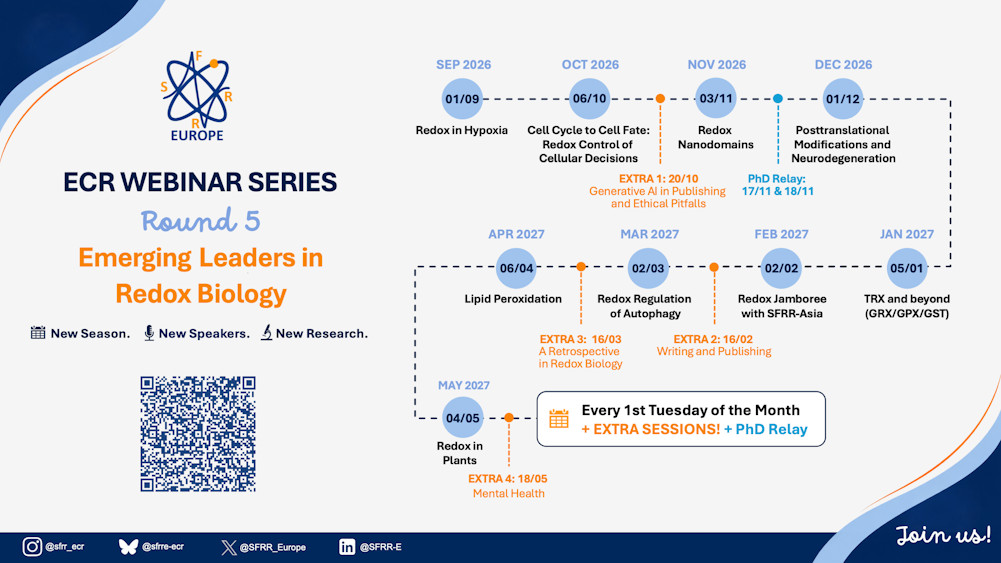
ECR WEBINAR SERIES ROUND 5, 2026-2027
2025-2026
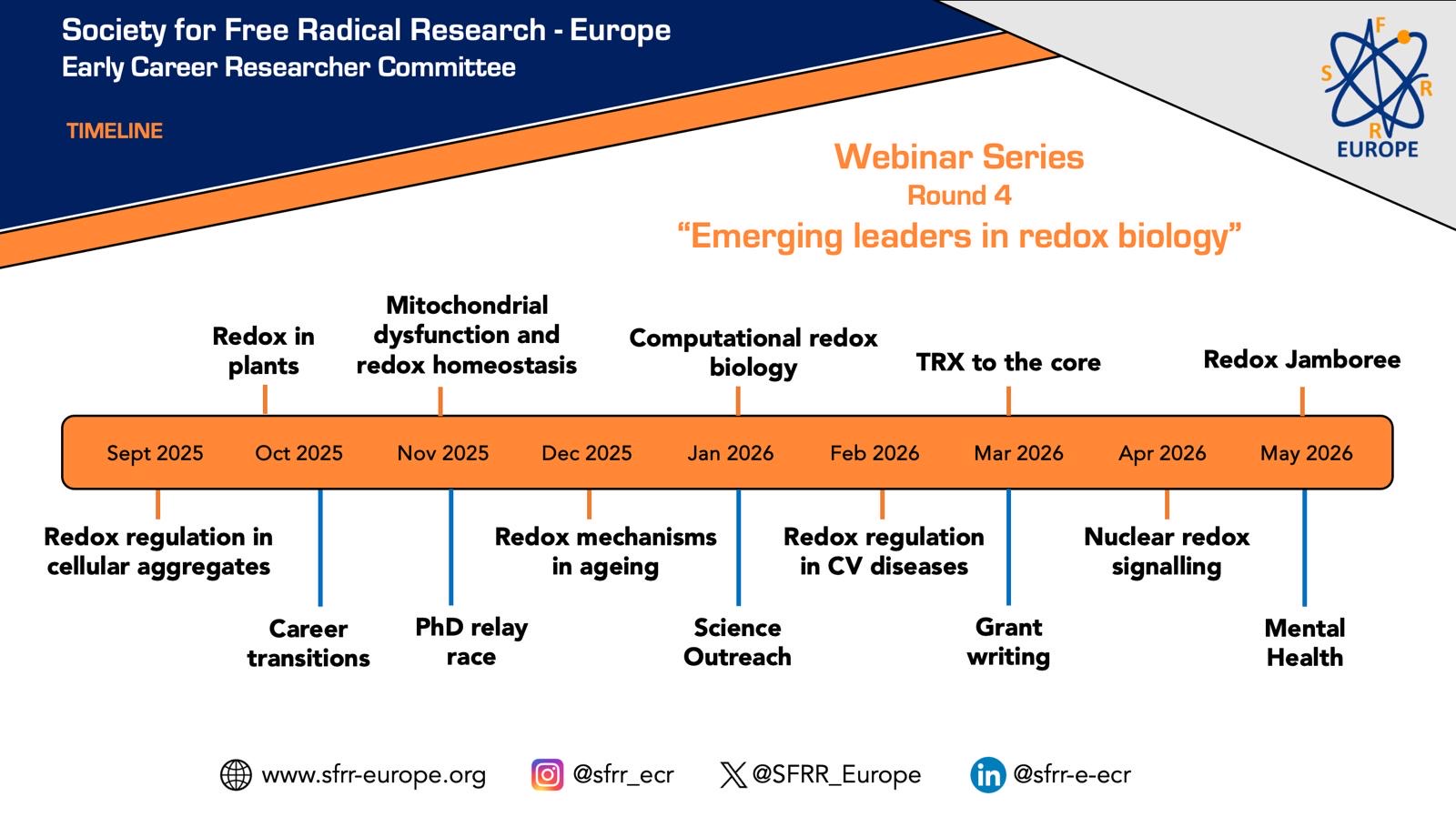
Webinars Timeline
- 2 September 2025 – Redox regulation in cellular aggregates
- 7 October 2025 – Redox in plants
- 4 November 2025 – Mitochondrial dysfunction and redox homeostasis
- 2 December 2025 – Redox mechanisms in ageing
- 13 January 2026 – Computational redox biology
- 3 February 2026 – Redox regulation in cardiovascular diseases
- 3 March 2026 – TRX to the core
- 7 April 2026 – Nuclear redox signaling
- 5 May 2026 – 9:00 AM CET Redox Jamboree (Europe–Australasia)
New ECR Skills Webinar Series
- 21 October 2025 – Career Transitions
- 24 February 2026 – Science Outreach
- 17 March 2026 – Grant Writing
- 19 May 2026 – Mental Health Month
Don't miss out – these webinars are a perfect chance to learn new skills, get inspired, and connect with fellow ECRs!
3rd February 2026 at 15:00 CET — Redox regulation in cardiovascular diseases

Beta-Cell Dysfunction in Diabetes: Redox Mechanisms and Beyond
Eloisa Vilas Boas, PhD
Department of Clinical and Toxicological Analysis, School of Pharmaceutical Sciences, University of Sao Paulo, Brazil
Assistant Professor at USP, leading research on pancreatic beta-cell pathophysiology and the interplay between redox state and calcium homeostasis. During her PhD she investigated NADPH oxidase-derived ROS in cytokine- and fatty acid-induced beta-cell dysfunction, including a 12-month research stay at Saarland University applying redox imaging with roGFP2-Orp1. Her postdoctoral work at USP's Energy Metabolism Laboratory explored mitochondrial calcium transport as a regulator of hepatic oxidative phosphorylation.
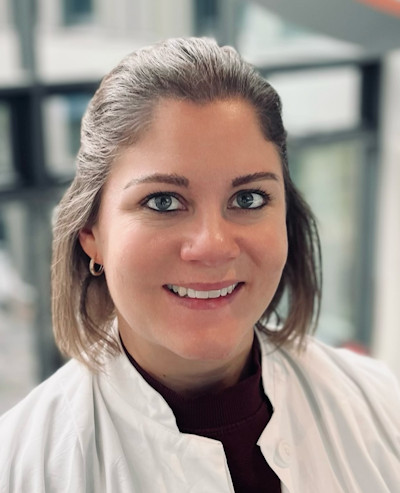
Redox signaling and ferroptosis in cardiovascular complications during chronic kidney disease
Janina Frisch, PhD
Department of Biophysics/Redox Physiology, University of Saarland, Germany
Postdoctoral researcher in Prof. Leticia Prates Roma's group, focused on how redox metabolism and reactive oxygen species govern cellular adaptation in cardio-renal complications, using genetically-encoded redox biosensors and in vivo models. One of her major projects investigates ferroptosis as a therapeutic target for cardiomyopathy in patients with chronic kidney disease.
2024-2025 Webinars
October 8th, 2024 at 15:00 CET — Insights into the peer review and publication of scientific papers

Insights into the peer review and publication of scientific papers
Mike Davies, Professor
Department of Biomedical Sciences, University of Copenhagen, Denmark
Has worked in the UK (York, Brunel), Australia (Heart Research Institute, Sydney) and Denmark (Copenhagen). Previously Editor-in-Chief of Free Radical Research for 10 years; currently Co-Editor-in-Chief of Redox Biochemistry and Chemistry and Scientific Integrity and Ethics Editor for a group of Elsevier journals including Redox Biology. Former President of SFRR-Australasia, SFRR-International and SFRR-Europe. His research examines protein oxidation and extracellular matrix modification in cardiovascular disease.
Latest Speakers
7th May 2024 at 15:00 CET — Inter-tissue communication
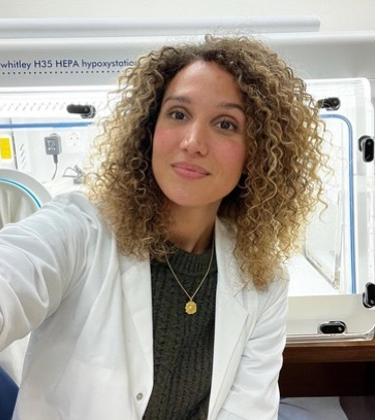
Redox modulation in aging mediated by stem cell-derived extracellular vesicles
Cristina Mas-Bargues, PhD
Department of Physiology, School of Medicine, University of Valencia, Spain
Started her research on stem cell aging and oxidative stress, with a PhD in 2017 at the University of Valencia and research stays at UC Berkeley and Albert Einstein College of Medicine. Now Assistant Professor at Valencia, focused on extracellular vesicles from stem cells and their application in regenerative medicine.
Thinking redox outside of the cell: how an ER-resident chaperone governs cellular adhesion and the extracellular matrix
Renato Simoes Gaspar, PhD
State University of Campinas (UNICAMP), Sao Paulo, Brazil
Studied redox regulation of platelet physiology during his PhD at the University of Reading (UK), then researched extracellular thiol isomerase PDIA1 and platelet-endothelium interaction in hyperglycemia at the Heart Institute, University of São Paulo. Now starting an independent lab at UNICAMP focused on the extracellular matrix and cardiovascular disease.
9th April 2024 at 15:00 CET — Redox control of aging
The impact of early-in-life redox signaling in health, aging and disease
Daphne Bazopoulou, PhD
Biology of Stress and Aging Lab, Department of Biology, University of Crete, Greece
Assistant Professor and Group Leader at the University of Crete since 2021, after two postdoc positions at the University of Michigan. Her studies in C. elegans revealed that inter-individual differences in developmental ROS levels contribute to variations in stress resistance and lifespan, and provided the first demonstration of a redox-regulated histone methylation event.
Redox signaling in aging
Helena Cochemé, PhD
Redox Metabolism Group, MRC Laboratory of Medical Sciences, London, UK
UKRI Investigator at the MRC LMS and Honorary Senior Lecturer at Imperial College London. PhD in Biochemistry from Cambridge (MRC Mitochondrial Biology Unit); characterized the mitochondria-targeted H2O2 probe MitoB during her postdoc with Prof. Linda Partridge. Her lab studies redox signaling in aging and metabolic disorders using Drosophila.
5th March 2024 at 15:00 CET — Grant writing support for ECRs

Orientation, guidance and tips and tricks for successful grant writing for early career scientists
Isabel Fabregat, PhD
Bellvitge Biomedical Research Institute (IDIBELL), Barcelona, Spain
Discovered that TGF-β induces cell death in hepatocytes via ROS production, proposing it as an inducer of intrinsic apoptosis. Moved to IDIBELL as senior investigator in 2005; created the IT-LIVER consortium in 2013 to study TGF-β as a therapeutic target in liver diseases, with continuous national and European (Marie Curie, COST) funding.
6th February 2024 at 15:00 CET — Redox signaling in cancer
Regulation of cell adhesion and anoikis by S-nitrosylation
Salvatore Rizza, PhD
Redox Biology Group, Danish Cancer Institute, Copenhagen, Denmark
Senior researcher in Giuseppe Filomeni's lab, studying GSNOR, a key enzyme regulating nitric-oxide-modified proteins. Linked GSNOR loss to mitochondrial respiration vulnerabilities in tumors, its age-dependent decline via DNA methylation, and in 2023 showed GSNOR deficiency drives FAK1 hyperactivation in most solid tumors — positioning GSNOR as a novel therapeutic marker.
MYCN Mediates Ferroptosis Sensitivity in MYCN-amplified Cancers
Hamed Alborzinia, PhD
HI-STEM & Division of Stem Cells and Cancer, German Cancer Research Center (DKFZ), Heidelberg, Germany
Graduated in veterinary medicine before a Molecular Biology PhD at Heidelberg University studying cancer cell metabolism. Now a group leader at HI-STEM/DKFZ, uncovering the metabolic cell death pathway of ferroptosis to identify therapeutic strategies for cancers with MYC deregulation and drug tolerance.
Webinar of 9th January 2024 — Redox mechanisms in plants

Exploring plant redox landscapes by developing novel NADP redox biosensors
Jan-Ole Niemeier
Universität Münster, Germany
Let it shine: Monitoring plant live dynamic with fluorescent biosensors
José Manuel Ugalde
University of Bonn, Germany
2023 Webinars — Previous Speakers
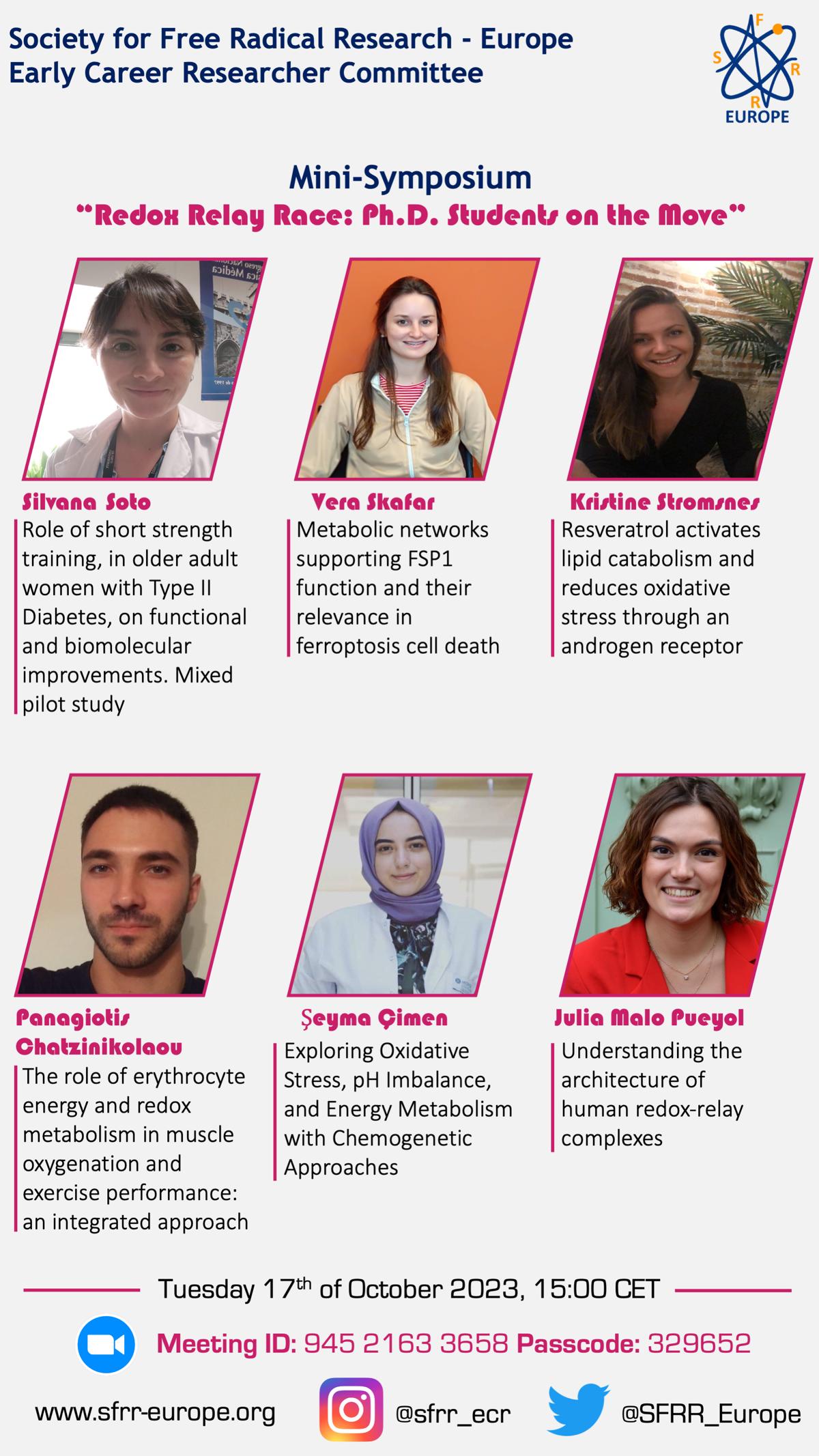
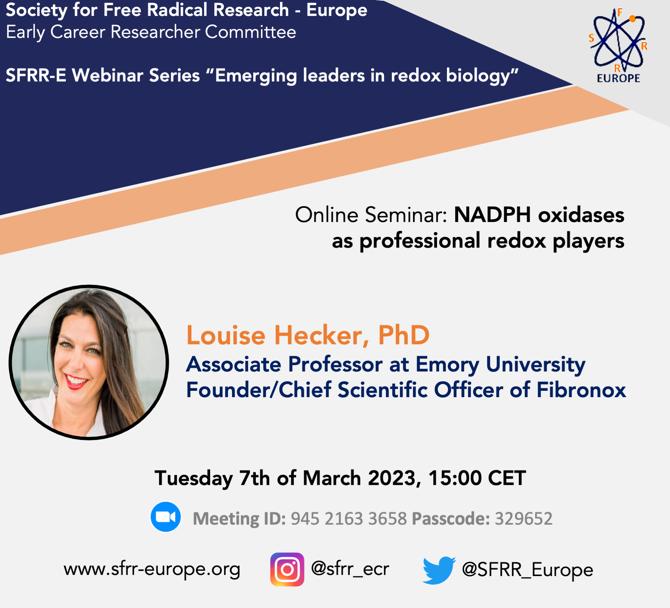
Redox Relay Race: PhD students on the move
The ECR subcommittee also hosted in 2023 the first PhD student mini Symposium to give opportunities to PhD students to present their work. The selection of the speakers was done based on a short video presentation about their work.